



What Makes a Modern Minimalist Engagement Ring Timeless?
Last Updated: November 2, 2026
Quick Summary
A minimalist engagement ring stays timeless by stripping the design back to one clear centre stone, a clean band and nothing competing for attention. A band of 1.8mm to 2.2mm, with 2.0mm in platinum or 18ct white gold balancing delicacy and durability, keeps the look refined and built to last.
- A bezel setting wraps the diamond in a smooth metal rim for a sculptural, modern form.
- Bands under 1.8mm can feel fragile over decades, especially in softer metals.
- A low-profile setting sits close to the finger and is less likely to snag.
- An emerald cut brings clean step-cut lines that suit a slim band.
- Lab-grown and mined diamonds are graded on the same scales, so insist on certification.
Table of Contents
- Why Modern Minimalist Engagement Ring Designs Endure
- Minimalist Engagement Ring Ideas: Settings and Stones That Work
- Lab-Grown Diamond Engagement Rings: A Value-Conscious Choice
- Bespoke Engagement Rings in Birmingham: What to Expect
- Frequently Asked Questions
Why Modern Minimalist Engagement Ring Designs Endure
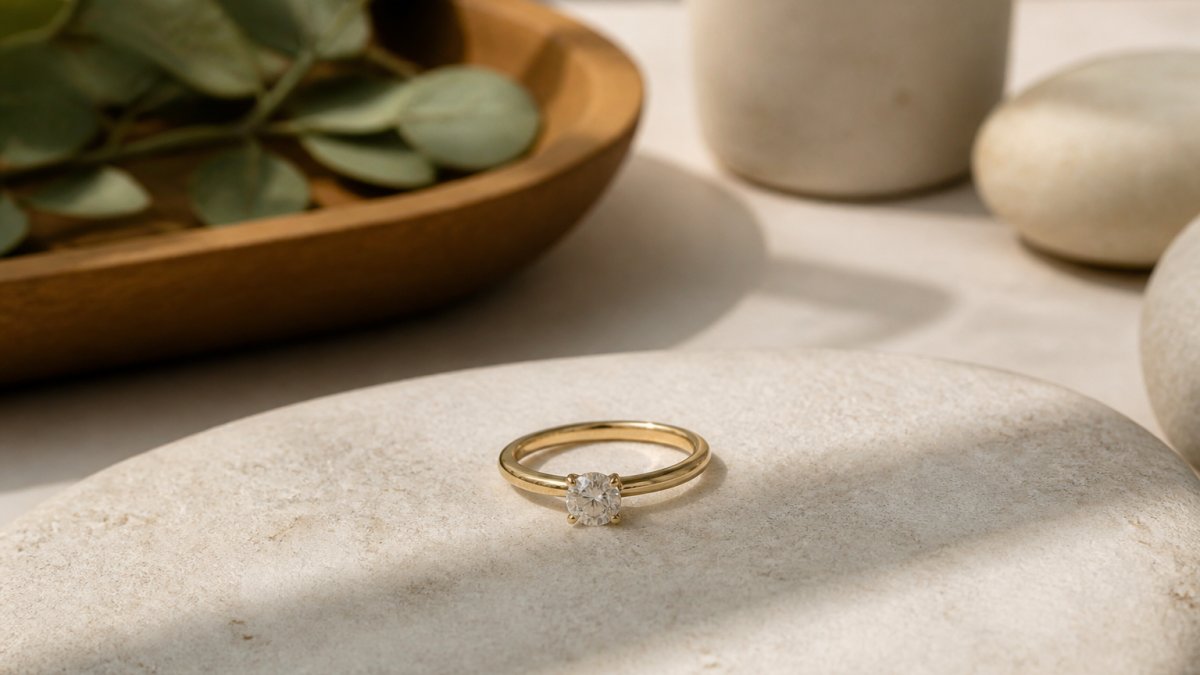
A modern minimalist engagement ring strips a design back to its essentials: one clear centre stone, a clean band, and nothing competing for attention. That restraint is why these designs tend to outlast passing trends.
The appeal sits in proportion: clean lines, balanced form and understated elegance do more work than any embellishment. A refined design never looks dated because it never chased a moment.
Minimalist Engagement Ring Ideas: Settings and Stones That Work
Start with the setting, because it decides how much the centre stone dominates and how the ring wears day to day. A bezel set engagement ring wraps the diamond in a smooth metal rim, protecting the edge and giving a sculptural, modern form. Solitaire settings put all attention on the stone. Both are textbook minimal design, but they suit different lives.
Band width matters more than most buyers expect. A band of 1.8mm to 2.2mm reads as genuinely minimal, but anything under 1.8mm can feel fragile over decades, especially in softer metals. A 2.0mm band in platinum or 18ct white gold balances delicacy and durability. A low-profile setting sits close to the finger and is less likely to snag; a higher setting shows more of the stone but demands more care.
Stone shape drives the architectural feel. An emerald cut brings clean, step-cut lines that suit a slim band and a bezel or four-claw setting. An oval elongates the finger and works well with a plain band, but proportions vary, so ask to see several side by side. A round brilliant is the most forgiving shape in a minimalist setting. For subtle sparkle, browse our shoulder set engagement rings; for pure restraint, see our emerald cut solitaire rings, or explore certified oval diamond rings if you prefer a softer outline.
Metal choice finishes the look and affects maintenance. Platinum and white gold keep it cool and modern, and yellow and rose gold add warmth. Your choice of metal also affects how the ring looks and how much upkeep it needs over time.
Lab-Grown Diamond Engagement Rings: A Value-Conscious Choice
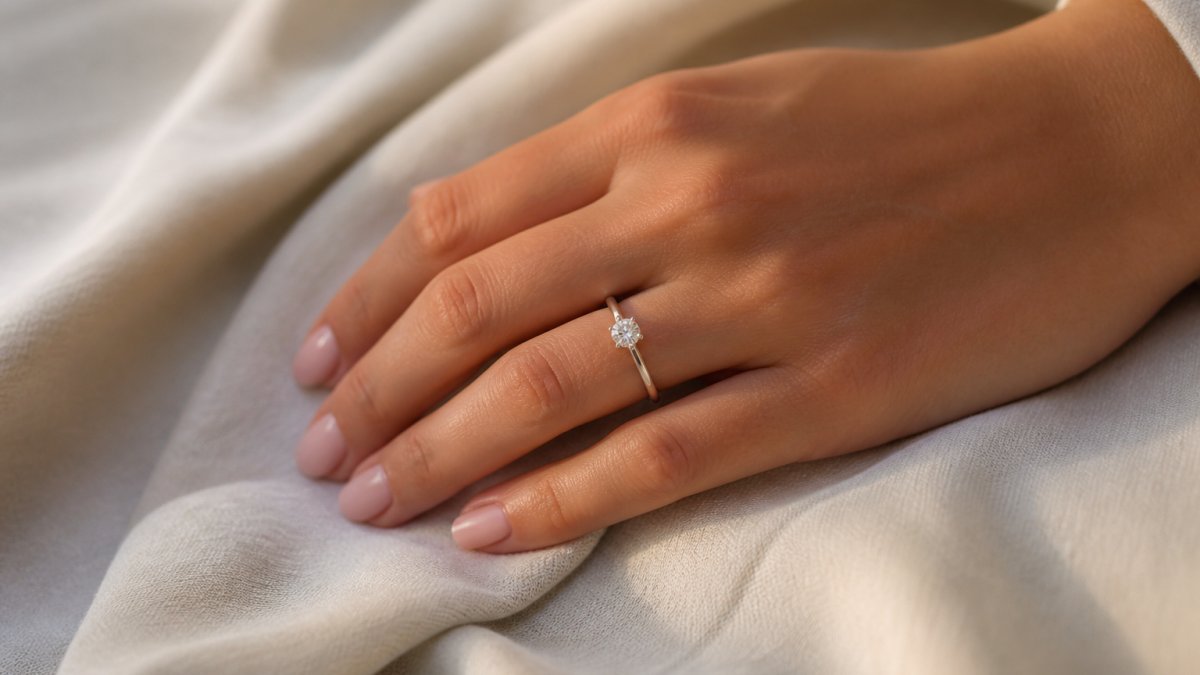
Lab-grown diamonds are chemically identical to natural diamonds, and they cost less for the same cut, colour and clarity. That matters if you want a larger stone or a finer setting without stretching the budget. But the value story is more nuanced than the label suggests, and most guides skip the parts that affect what you actually get for your money.
The first thing to understand is that lab-grown and mined diamonds are graded on the same scales. A certified lab-grown stone will carry a report from a recognised grading lab, and that report is what protects you. The catch most guides skip: value depends entirely on certification, not on the label. A GIA guide to diamond grading reports explains what an independent report actually verifies. Insist on one before you commit, and read our guide to relying on certified diamonds first.
Because lab-grown stones cost less per carat, buyers often move up a size or two at the same colour and clarity grade. That can suit a minimalist design, where a clean, well-proportioned stone does most of the visual work, but going too large on a slim band upsets the balance that makes minimalism work.
Lab-grown diamonds have a shorter history in the secondary market, so buyers often choose them for the ring they want to wear rather than as an investment. If resale matters, a mined diamond with strong certification is the more established route; if not, a certified lab-grown stone gives you the same brilliance with paperwork you can check.
Sustainability claims for lab-grown stones vary by producer, so ask for specifics if this matters to you. Coloured gemstones such as sapphires are another alternative, though they are graded differently and need their own certification checks.
Watch out: a lab-grown diamond certificate should state that the stone is lab-grown, and the report number should match the stone. If a seller cannot show you a matching report, walk away.
Bespoke Engagement Rings in Birmingham: What to Expect
Bespoke means you shape the design rather than simply picking a ready-made piece.
When comparing jewellers, ask plainly who makes the ring and what aftercare comes with it. For a deeper walkthrough, read our guide to choosing custom engagement rings.
| Stage | What Happens | What You Approve |
|---|---|---|
| Consultation | Style, budget, stone brief | Design direction |
| Design | Sketches or CAD renders | Final design |
| Stone selection | Certified diamonds shown | The exact stone |
| Making | Ring crafted and set | Finished piece |
| Aftercare | Cleaning, polishing, resizing | Lifetime care terms |
Choosing a minimalist ring is really a decision about proportion, certification and who makes it. Marlows Diamonds offers GIA-certified natural and lab-grown diamonds, in-house workshops for bespoke pieces, and lifetime aftercare covering cleaning, polishing and resizing. Get started with Marlows Diamonds and design a ring built to last.

FAQ's
Some of the most common Q&A's